
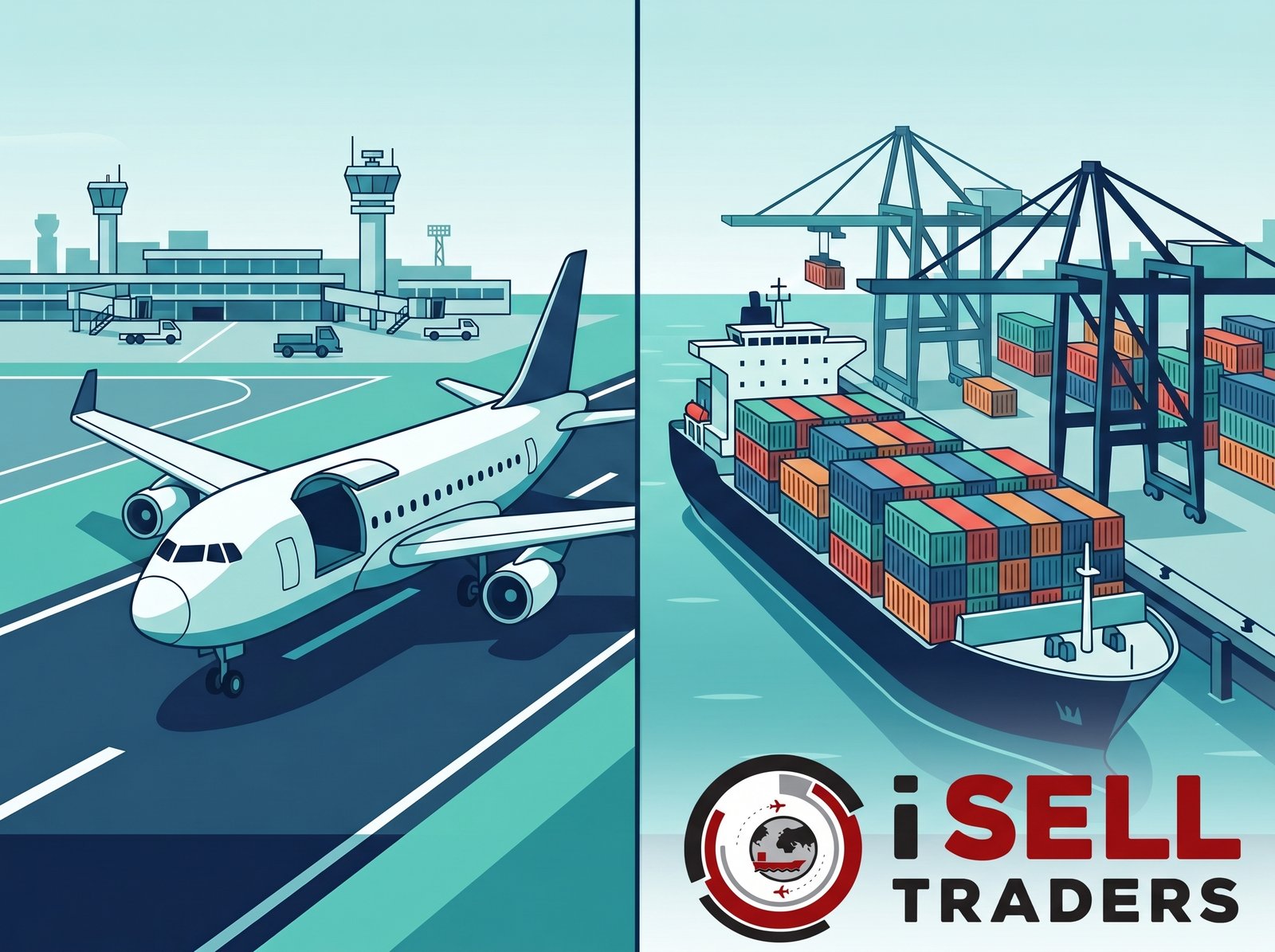

Which Is Right for Your Business?
Choosing between air freight and sea freight is one of the first practical decisions every importer and exporter in Pakistan has to make — and getting it wrong can quietly eat into your margins or blow your delivery deadlines. Whether you are shipping raw materials from China, exporting textiles to Europe, or fulfilling Amazon FBA orders, the right freight choice depends on your cargo type, budget, and how urgently your goods need to arrive.
In this guide, we break down how air freight and sea freight actually compare for Pakistani businesses — covering realistic costs, transit times, and the ports and airports you’ll be dealing with — so you can make the right call for your next shipment.
What Is Air Freight?
Air freight moves cargo using commercial or dedicated cargo aircraft. It is the fastest international shipping option available, and Pakistan’s major airports — Jinnah International Airport (Karachi), Allama Iqbal International Airport (Lahore), and Islamabad International Airport — all handle significant volumes of air cargo connecting local businesses to global markets.
Air freight is generally the right choice for:
- High-value goods (electronics, branded fashion items, jewelry)
- Perishables (fresh produce, seafood, pharmaceuticals)
- Time-sensitive e-commerce orders, including Amazon FBA restocks
- Smaller shipments where warehousing costs would otherwise add up
What Is Sea Freight?
Sea freight moves cargo via container ships through Pakistan’s main seaports — primarily Karachi Port and Port Qasim, with Gwadar Port increasingly used for regional trade. It is significantly slower than air freight, but far more cost-effective for heavy or bulky shipments.
Sea freight is generally the right choice for:
● Bulk raw materials and industrial components
● Heavy machinery and equipment
● Large-volume, non-urgent inventory restocking
● Shipments where cost per unit matters more than speed
Cost Comparison: Air Freight vs Sea Freight
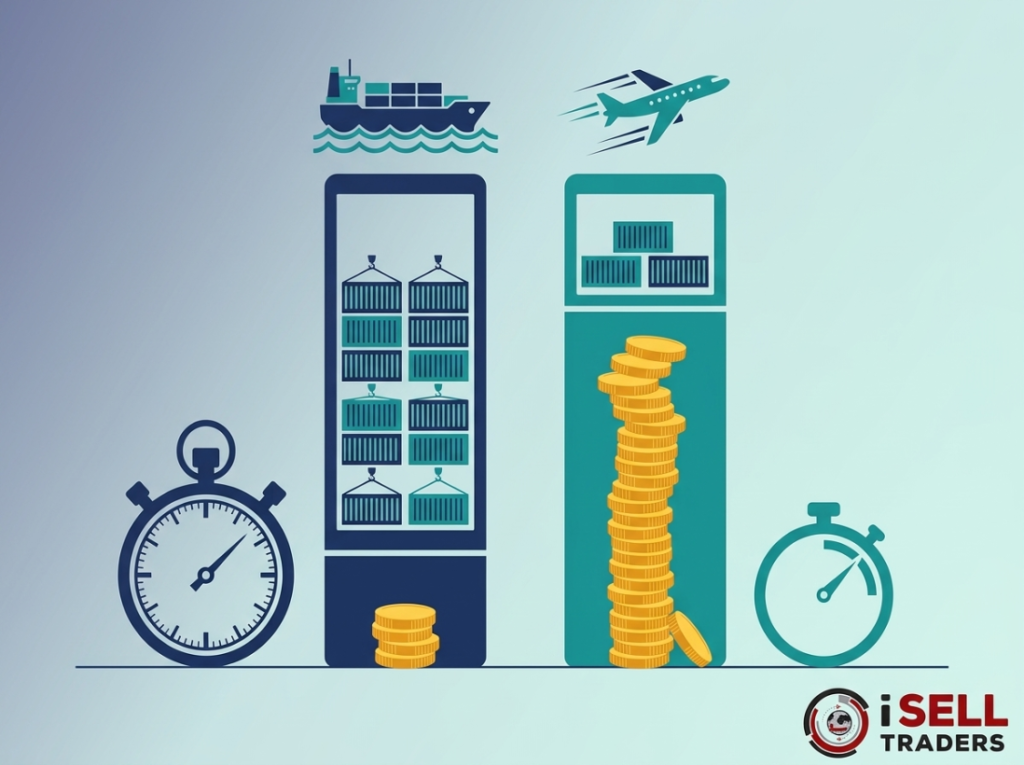
As a general rule, air freight costs 5 to 10 times more per kilogram than sea freight, largely due to fuel costs and weight-based pricing. Sea freight, by contrast, is priced by container volume (20ft or 40ft containers typically holding 20–30 tons), which makes it dramatically cheaper for high-volume shipments.
That said, air freight can still work out cheaper overall for small, light, high-value shipments once you factor in the warehousing, insurance, and capital-tied-up costs of a slower sea shipment sitting in transit for weeks.
Transit Time Comparison
Air freight shipments from Pakistan typically arrive at international destinations within 3–7 days, depending on the route and customs processing. Sea freight, on the other hand, usually takes 4–6 weeks for most major trade routes, and longer for destinations with limited direct shipping lines.
Tip: If you’re shipping ahead of peak seasons like Ramadan, Eid, or year-end holiday demand, book both air and sea freight capacity early — congestion during these periods significantly increases delays and costs.
Customs Clearance: What to Expect at Karachi Port and Airports
Regardless of which mode you choose, every shipment must be declared through Pakistan’s WeBOC (Web-Based One Customs) system before it can be cleared. Import declarations are risk-assessed automatically — low-risk shipments are usually cleared quickly, while flagged shipments may be selected for physical examination.
Air freight generally clears customs faster due to fully electronic documentation and smaller shipment volumes per flight. Sea freight shipments, especially through Karachi Port and Port Qasim, can face longer clearance times if documentation — invoices, packing lists, bills of lading, and certificates of origin — isn’t fully accurate. Missing or incorrect paperwork remains the single most common cause of clearance delays for both freight types.
Which Should You Choose? A Quick Decision Framework
Use these questions to decide:
● Is your shipment under 100–150kg and time-sensitive? → Air freight
● Are you shipping a full or near-full container load of bulk goods? → Sea freight
● Is your product perishable or high-value per kg? → Air freight
● Can you plan 4–6 weeks ahead and prioritize cost savings? → Sea freight
● Are you testing a new product with a small trial order? → Air freight, then switch to sea freight once volumes grow
Hybrid Shipping: A Growing Middle Ground
Many Pakistani exporters are increasingly combining both modes — using sea freight for the bulk of an order and air freight for smaller, urgent top-up shipments. This hybrid approach balances cost efficiency with the flexibility to respond quickly to demand spikes or stockouts, and is becoming especially common among e-commerce sellers shipping to Amazon FBA warehouses.
Final Thoughts
There’s no universal right answer between air freight and sea freight — the best choice depends on your product, budget, and how much time flexibility your business can afford. Many growing import-export businesses in Pakistan end up using both strategically: air freight to stay responsive, and sea freight to stay competitive on price.
Recommended internal links for your iSell Traders article
I would internally link this article to your existing:




your supplier or a freight forwarder to choose a shipping method suited to your order size.