
If you’re trying to start a business in Pakistan, the hardest part usually isn’t registration — it’s deciding what to actually build. This guide walks through your real options, both online and offline, the legal steps every business needs, and realistic costs, so you can pick a direction and move.
Step 1: Decide What Kind of Business You Want to Start
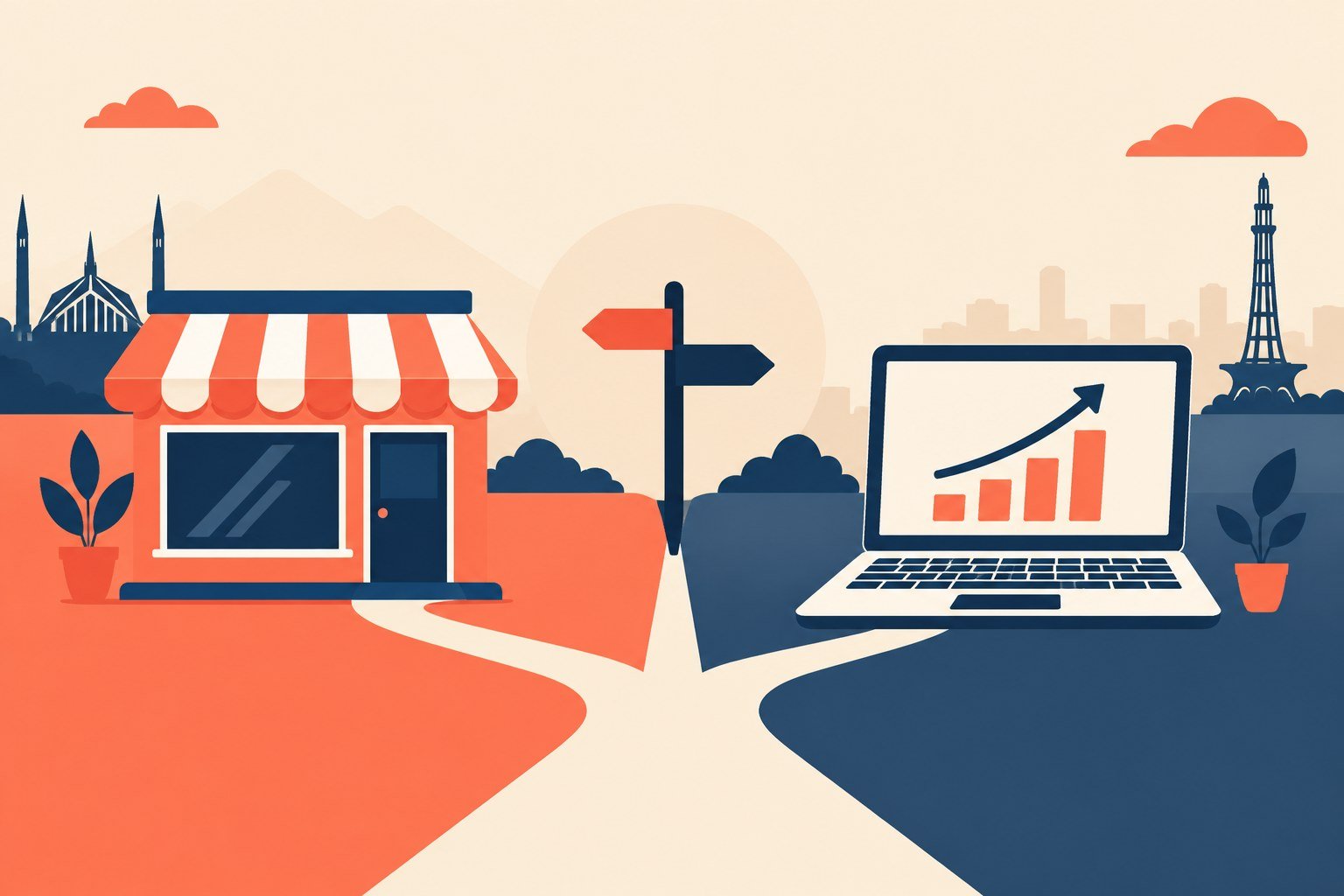
Before anything else, figure out whether you want to sell products, offer services, or build something online versus a physical, local business. Each path has a different starting cost, timeline, and skill requirement. The sections below break down your real options.
Starting an Online Business in Pakistan
Online businesses generally cost less to start and let you reach customers beyond your city. Here are the most common paths people take.
E-Commerce (Your Own Online Store)
You can sell physical products through your own store using platforms like Shopify, or list on existing marketplaces like Daraz. Our e-commerce business guide and Shopify store guide cover both approaches in detail.
Dropshipping
Dropshipping lets you sell products without holding inventory yourself — your supplier ships directly to the customer. It’s a popular low-capital entry point. See our dropshipping guide for the full setup process.
Freelancing
If you have a skill like writing, design, or development, freelancing lets you earn without building a product business at all. Our freelancing vs. e-commerce comparison helps you decide which fits you better, and our PSEB registration guide covers the tax benefits available to registered IT freelancers.
Digital Agencies and Content Businesses
If you’d rather sell a service than a product, consider a digital marketing agency, a web development agency, a content writing business, or building a YouTube channel. These need skill more than capital to get started.
Starting a Traditional Business in Pakistan
Offline businesses still make sense, especially if you want steady local demand or prefer working with physical products and customers face to face.
Retail Shop or Grocery Store
A local shop remains one of the most common small business paths in Pakistan. Our retail shop registration guide and grocery store guide walk through licensing and setup.
Franchise
Buying into an established brand reduces your risk, since you’re using a proven business model. Our franchise business guide and food franchise guide cover costs and options.
Home-Based Food Business
If you want to start small from home, a food business is one of the lowest-cost entry points available. Our home food business guide covers licensing and getting your first customers.
Small-Scale Manufacturing
If you want to produce rather than resell, small manufacturing is a realistic path with the right equipment and space. See our small manufacturing guide for specifics.
Legal Steps Every Business in Pakistan Needs
Whatever you choose, most businesses in Pakistan need the same basic legal foundation.
- Choose your structure. A sole proprietorship only needs an NTN. A private limited company needs SECP registration for liability protection. Our SECP company registration guide explains when each makes sense.
- Register for your NTN. Every business, online or offline, needs this to operate legally and pay taxes. Our NTN registration guide covers the FBR process.
- Open a business bank account. Keeping business and personal finances separate makes tax filing and growth far easier.
- Register your trademark, if relevant. Protecting your brand name early avoids disputes later. See our trademark registration guide.
How Much Money Do You Need to Start a Business in Pakistan?
This depends entirely on what you choose. Freelancing and content-based businesses can start with little more than a laptop and an internet connection. Dropshipping and e-commerce need some budget for a store platform and initial marketing, but no inventory investment upfront. Physical businesses like a retail shop, franchise, or manufacturing unit need real starting capital for inventory, rent, or equipment. Rather than guessing a single number, check the specific guide for the business type you’re considering, since costs vary enormously between an online service business and a physical shop.
Common Mistakes New Entrepreneurs Make in Pakistan
Starting Without Validating Demand
Many new business owners invest in inventory or a store before confirming anyone actually wants to buy. Talk to potential customers or test small before committing significant money.
Skipping Legal Registration
Operating without an NTN or proper registration causes problems later, from tax issues to trouble opening a business bank account or working with larger clients.
Choosing a Business Based on Trends Alone
A business model that’s popular right now isn’t automatically right for you. Match your choice to your actual skills, budget, and interests, not just what’s trending.
Frequently Asked Questions
What’s the easiest business to start in Pakistan with no money?
Freelancing is typically the lowest-cost entry point, since it needs a skill and internet access rather than upfront capital for inventory or a store.
Is it better to start an online or offline business in Pakistan?
It depends on your goals. Online businesses usually cost less to start and can reach customers nationwide. Offline businesses suit people who prefer local, in-person customer relationships and have some starting capital.
Do I need to register my business before I start selling?
Legally, yes. You need at minimum an NTN to operate and pay taxes correctly, even for a small online business.
Can I run an online business in Pakistan part-time?
Yes. Many freelancers, dropshippers, and small e-commerce sellers start part-time alongside existing jobs or studies before going full-time.
Final Thoughts
Starting a business in Pakistan comes down to picking a direction that matches your skills and budget, then following through on the legal basics. Whether you choose e-commerce, freelancing, a local shop, or a franchise, the registration steps stay largely the same. Browse the specific guides linked throughout this article for the exact setup process for your chosen path.