
Business Ideas Women Pakistan: Low Investment Guide 2026
Business ideas women Pakistan entrepreneurs pursue today rarely need a shop, staff, or large capital anymore. A mobile phone, internet connection, and consistent effort now cover most of what you actually need to start. This guide walks through the most realistic low-investment options for 2026, real costs to expect, and how to actually get your first customers.
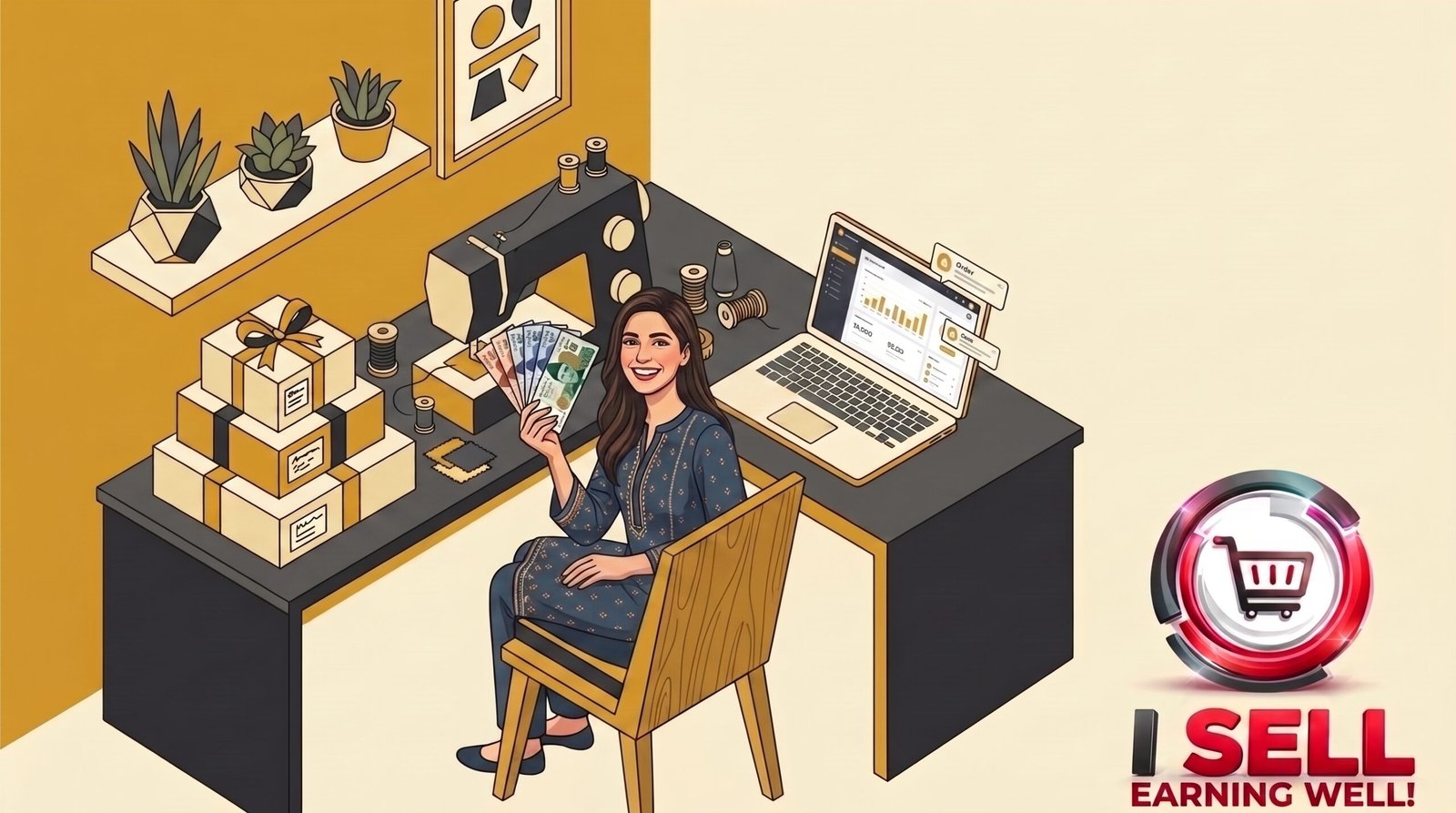
Home-Based Business Ideas Women Pakistan Sellers Are Building
A home-based boutique remains one of the most popular starting points. You can sell unstitched suits, stitched clothes, dupattas, abayas, or kidswear directly through Instagram and WhatsApp, without needing a storefront or inventory warehouse. Startup costs typically run PKR 20,000–50,000, mostly covering your first small batch of stock and basic product photography.
A home bakery works similarly. Start small with a few signature items, build a following through food photography on Instagram, and grow through word-of-mouth referrals once your quality speaks for itself. Just remember to check the legal side — food safety licensing and zoning rules genuinely apply here, even for a home-based operation.
Mehndi services and beauty services from home have low barriers to entry beyond skill itself. Reputation drives everything in this category, so early clients matter more than early marketing spend. Handmade jewelry and modest fashion or abaya brands follow a similar pattern — a modest upfront investment in materials, with growth coming primarily through consistent, well-photographed social media content.
Digital and Online Business Ideas Women Pakistan Freelancers Choose
If you’d rather skip physical products entirely, digital work offers genuinely flexible hours and near-zero startup cost. Content writing, virtual assistance, online tutoring, and social media management all fall into this category, and all depend far more on skill than capital.
Freelancing platforms like Fiverr and Upwork let you offer these services to both local and international clients. Because Pakistan already ranks among the top freelancing nations globally, this path has real infrastructure and community support behind it — you’re not building something from scratch in an unfamiliar space.
YouTube content creation and affiliate marketing round out the digital category. Both take longer to generate steady income than direct freelancing, but they build an asset that keeps earning with less ongoing hands-on work once established.
E-commerce Without Holding Inventory
Dropshipping and print-on-demand let you sell products without ever holding physical stock yourself. You list products, a customer orders, and a supplier or print partner fulfills and ships directly — you never touch the item. This significantly lowers your financial risk compared to a traditional inventory-based store, making it a genuinely accessible entry point even with limited starting capital.
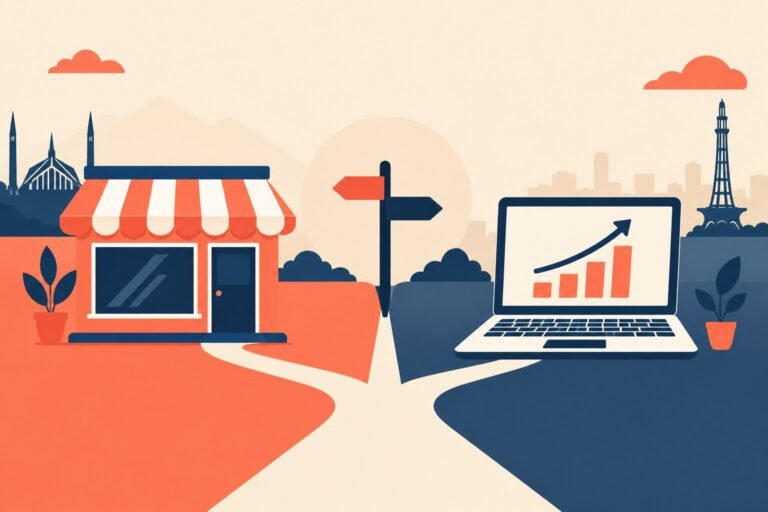
Choosing the Right Path for Your Situation
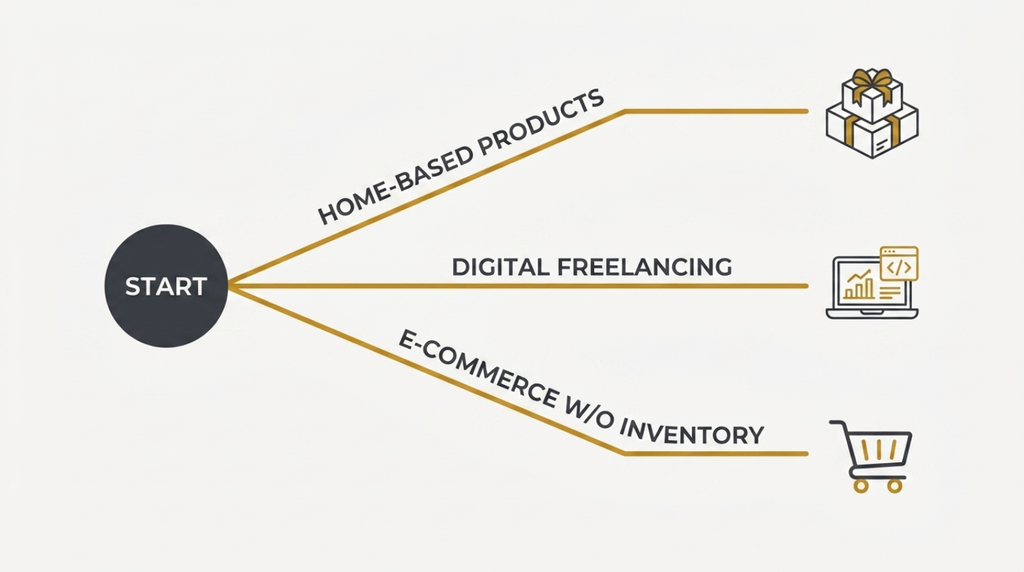
Use this quick framework:
- Have a hands-on skill (baking, mehndi, sewing)? → Start with a home-based product or service business, since your skill itself is your main investment.
- Comfortable with writing, design, or digital tools? → Freelancing gets you earning fastest, with essentially zero upfront cost.
- Want to test a product idea without financial risk? → Dropshipping or print-on-demand lets you validate demand before committing real capital.
- Have some savings and want to build something bigger? → A home-based boutique or bakery with real inventory offers more growth potential, at the cost of higher upfront investment.
Common Problems and How to Handle Them
Problem: You’re not sure which idea actually fits your situation.
Way out: start with whatever requires the least money to test. If a home bakery or boutique needs real capital, use a low-cost freelancing skill first to build savings and market knowledge, then reinvest into the bigger idea later.
Problem: You’ve started but aren’t getting customers yet.
Way out: consistency in posting and photo quality matters more than posting frequency alone in the early months. Most successful home-based sellers in Pakistan built momentum through word-of-mouth after their first genuinely satisfied customers, not through paid ads.
Problem: You’re worried about running a business informally without proper registration.
Way out: register your NTN early regardless of your business size, since it’s required for most formal growth steps later — a business bank account, sales tax registration if you scale, or Chamber of Commerce membership.
Problem: You have very little starting capital and feel stuck before you begin.
Way out: freelancing genuinely requires close to zero capital beyond what you already have — a phone and internet connection. Start there, build initial income and confidence, then move into a product-based business once you have some savings to work with.
Final Thoughts on Business Ideas Women Pakistan Entrepreneurs Can Pursue
Business ideas women Pakistan entrepreneurs succeed with usually share one thing in common: they started small, stayed consistent, and reinvested early profits into growth. Whether you choose a home-based product business, freelancing, or e-commerce without inventory, the real barrier to starting in 2026 is genuinely lower than it’s ever been. Pick the path that matches your current skills and capital, and start with your first small step today.
Suggested internal links (add where relevant):
- Print on Demand Pakistan
- Fiverr vs Upwork Pakistan
- NTN and Sales Tax Registration for Import Export Pakistan
- Home Food Business Pakistan
Suggested external links (authoritative sources):
Tags: business ideas women Pakistan, low investment business Pakistan, home based business women, online boutique Pakistan, freelancing for women Pakistan, home bakery business Pakistan, dropshipping Pakistan women, digital business ideas Pakistan, women entrepreneurs Pakistan 2026, small business startup Pakistan