
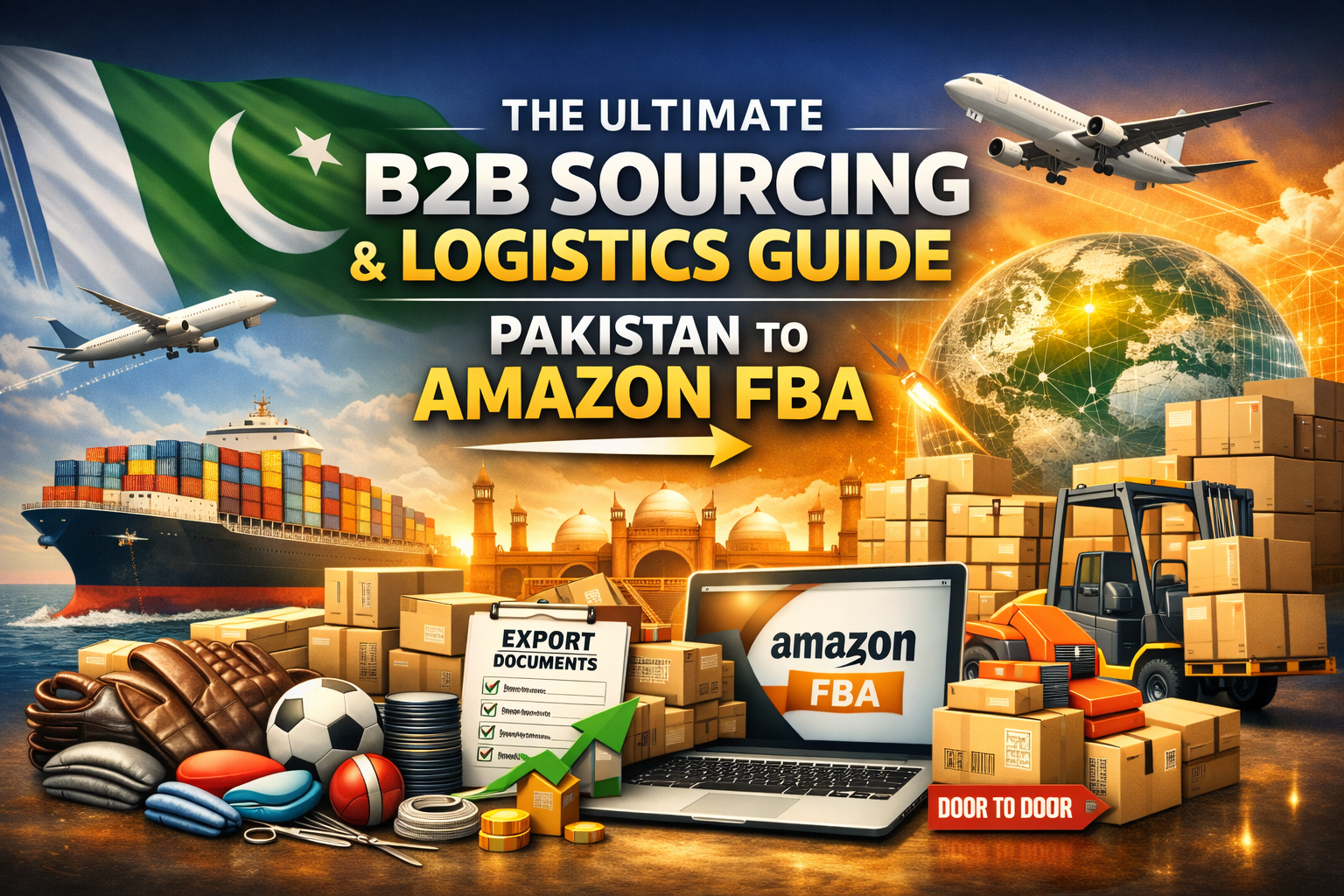

The Ultimate B2B Sourcing and Logistics Guide from Pakistan to Amazon FBA
Pakistan has become one of the world’s most promising sourcing destinations for international buyers, Amazon sellers, wholesalers, and ecommerce businesses. Every year, thousands of businesses purchase high-quality products from Pakistan and export them to customers across the United States, the United Kingdom, Europe, and the Middle East.
However, many entrepreneurs know how to create an Amazon Seller Account but struggle with the next challenge—finding reliable manufacturers, completing export documentation, and shipping products from Pakistan to international fulfillment centers.
If you are planning to build a profitable export business, this guide explains the complete B2B sourcing process, from selecting manufacturers to delivering products directly to Amazon FBA warehouses.
Why Choose Pakistan for B2B Sourcing?
Pakistan offers competitive manufacturing costs, skilled labor, and internationally recognized products. As a result, businesses worldwide source products from Pakistan for private labeling, wholesale distribution, and Amazon FBA businesses.
Some of Pakistan’s strongest export sectors include:
- Leather products
- Sports goods
- Textile products
- Home textiles
- Surgical instruments
- Denim garments
- Towels
- Cotton apparel
- Handicrafts
- Rice and food products
Because manufacturing costs remain competitive, Pakistan provides excellent opportunities for international buyers looking for quality products at attractive prices.
Step 1: Finding Reliable Manufacturers in Pakistan
The foundation of every successful export business is choosing the right manufacturer.
Two cities dominate Pakistan’s export manufacturing industry.
Sialkot – Pakistan’s Export Manufacturing Hub
Sialkot is internationally recognized for manufacturing:
- Leather jackets
- Leather gloves
- Sports apparel
- Footballs
- Cricket equipment
- Surgical instruments
- Boxing equipment
- Fitness products
Many internationally known brands source products from factories located in Sialkot.
Faisalabad – Pakistan’s Textile Capital
Faisalabad specializes in:
- Cotton fabrics
- Bed sheets
- Towels
- Hotel linen
- Textile garments
- Home furnishing
- Apparel manufacturing
Its textile industry serves buyers from Europe, North America, and the Middle East.
How to Verify a Reliable Manufacturer
Before placing a bulk order, always verify your supplier.
Recommended steps include:
- Request company registration documents.
- Ask for export history.
- Request product samples.
- Verify factory certifications.
- Review previous international clients.
- Inspect production quality.
- Compare quotations from multiple manufacturers.
Never finalize a supplier based solely on price. Quality, consistency, and communication are equally important.
Step 2: Register Your Export Business
Before exporting products, your business should be properly registered.
Essential registrations include:
- National Tax Number (NTN)
- Active Taxpayer List (ATL)
- Business Bank Account
- Chamber of Commerce Membership
- Pakistan Single Window (PSW)
- WeBOC Registration
These registrations allow exporters to complete customs procedures legally and efficiently.
Step 3: Understanding the WeBOC Registration Process
The WeBOC (Web-Based One Customs) system is Pakistan’s digital customs clearance platform.
Through WeBOC, exporters can:
- File export declarations
- Submit customs documents
- Track shipments
- Complete electronic customs clearance
Generally, the following documents are required:
- NTN Certificate
- ATL Status
- Chamber Membership
- Business Bank Account
- Bank Maintenance Certificate
- Required processing fees
After verification, customs authorities issue secure login credentials that allow exporters to process shipments online.
Step 4: Source Raw Materials from China
Many manufacturers import raw materials, packaging, machinery, or accessories from China before producing finished goods.
One increasingly popular option is Sourcing from China to Pakistan via the Sust Border.
Compared to traditional sea freight, the Khunjerab Pass land route often reduces transit time for selected shipments while improving supply chain efficiency.
Businesses commonly import:
- Packaging materials
- Fabric accessories
- Zippers
- Electronics
- Machinery
- Labels
- Plastic components
These materials are then converted into finished export products within Pakistan.
Step 5: Prepare Products for Amazon FBA
Amazon maintains strict packaging and labeling requirements.
Before shipping products, every item should include:
- Amazon FNSKU Barcode
- Correct Packaging
- Carton Labels
- Shipment Labels
- Product Inspection
Failure to follow Amazon’s packaging standards may result in shipment delays or rejection.
Step 6: Choose the Right Freight Forwarder
A professional freight forwarder manages international transportation, customs documentation, and delivery to Amazon fulfillment centers.
A reliable freight forwarder can assist with:
- Export documentation
- Customs clearance
- Air freight
- Sea freight
- Insurance
- DDP shipping
- Warehouse coordination
Choosing an experienced logistics partner reduces shipment delays and customs issues.
Understanding DDP Shipping
Many Amazon sellers prefer Delivered Duty Paid (DDP) shipping.
Under DDP:
- Duties are prepaid.
- Taxes are prepaid.
- Customs clearance is completed before delivery.
- Products reach Amazon warehouses ready for receiving.
Since Amazon does not act as the Importer of Record (IOR), exporters must ensure their freight forwarder can legally complete customs clearance in the destination country.
Air Freight vs Sea Freight
The shipping method depends on product type, budget, and urgency.
Air Freight
Advantages:
- Fast delivery
- Suitable for lightweight goods
- Ideal for urgent inventory
Disadvantages:
- Higher shipping cost
- Lower cargo capacity
Sea Freight
Advantages:
- Lower shipping cost
- Suitable for heavy cargo
- Better for large shipments
Disadvantages:
- Longer transit time
- Requires shipment planning
Many exporters use Karachi Port for international sea freight, while urgent shipments are sent by air.
Shipping Products to Amazon FBA Warehouses
Once products leave Pakistan, the general process is:
- Goods leave the factory.
- Freight forwarder collects cargo.
- Export customs clearance is completed.
- Shipment departs Pakistan.
- Import customs clearance is completed abroad.
- Cargo reaches Amazon Fulfillment Center.
- Amazon scans inventory.
- Products become available for sale.
- Amazon handles storage, packing, shipping, and customer service.
This allows Pakistani exporters to focus on sourcing and production while Amazon manages order fulfillment.
Common Challenges in B2B Sourcing
Although Pakistan offers excellent export opportunities, businesses may encounter challenges such as:
- Inconsistent product quality
- Communication gaps
- Shipping delays
- Customs documentation errors
- Supplier reliability issues
- Rising freight costs
- Exchange rate fluctuations
Working with verified manufacturers and experienced logistics providers helps minimize these risks.
Best Practices for Successful B2B Sourcing
To build a successful export business:
- Verify every supplier.
- Start with sample orders.
- Maintain written contracts.
- Inspect product quality.
- Understand export regulations.
- Choose trusted freight forwarders.
- Follow Amazon FBA packaging standards.
- Build long-term relationships with manufacturers.
These practices reduce risk and improve long-term profitability.
Related Guides
If you’re planning to build an export business, you may also find these guides helpful:
- How to Start an Import Export Business in Pakistan
- How to Get PSW and WeBOC Registration
- Logistics Services for E-Commerce in Pakistan
- How to Start Drop-shipping in Pakistan
- How to Open a Shopify Store in Pakistan
Final Thoughts
Pakistan offers outstanding opportunities for entrepreneurs interested in B2B sourcing, international trade, and Amazon FBA exports. With world-class manufacturers, competitive production costs, and improving logistics infrastructure, businesses can successfully source products, complete export formalities, and ship goods to customers around the world.
Success, however, depends on selecting reliable manufacturers, understanding export regulations, using trusted freight forwarders, and maintaining high product quality. By following the right sourcing and logistics strategy, Pakistani businesses can compete confidently in global markets while building sustainable, long-term export businesses.


Very Helpful Sir Jazakallah