
Complete Guide
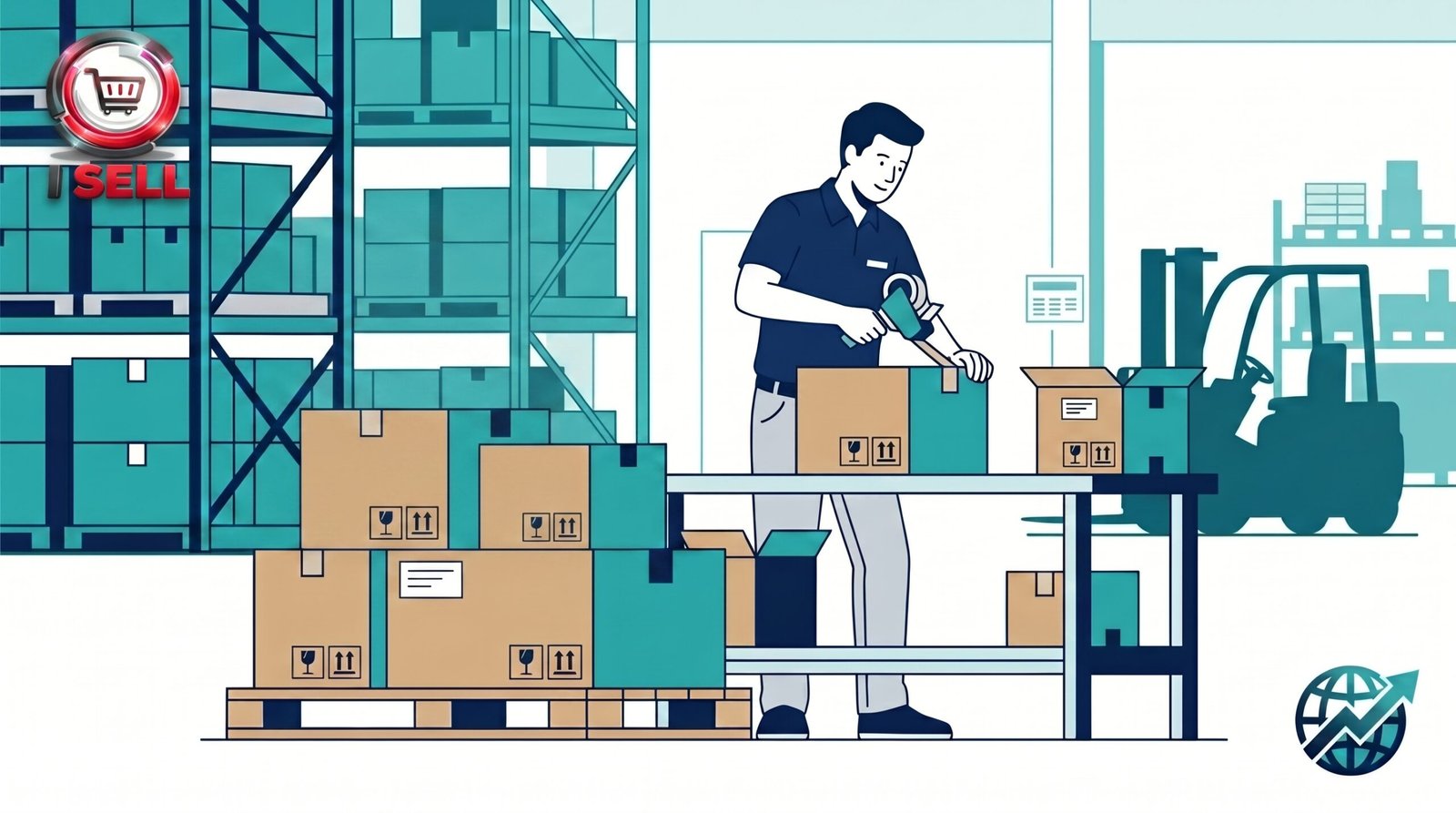
Packaging and labeling for export Pakistan shipments determines whether your goods arrive intact and clear customs smoothly, or get delayed, damaged, or rejected at the border. Many new exporters focus entirely on the product itself and treat packaging as an afterthought. That’s a costly mistake — incorrect packaging or missing labels trigger customs holds, damage claims, and in serious cases, outright rejection of your shipment.
This guide covers exactly how to package and label your products for international export, the materials that hold up under transit stress, and the documentation that keeps your shipment moving instead of stuck at a port.
Why Export Packaging Matters More Than Domestic Packaging
International shipments face far more stress than domestic ones. Your goods get loaded and unloaded multiple times, sit in humid or temperature-swinging environments, and travel much longer distances than a local delivery. Packaging that works fine for a domestic courier often fails completely on an international sea or air route.
Good export packaging does three things: protects your product physically, meets the destination country’s regulatory requirements, and carries the information customs officers need to process your shipment without delay.
Choosing the Right Packaging Materials
Your material choice depends on your product type and shipping method:
- Double-wall corrugated cardboard — works well for lighter goods and general merchandise, offering good protection at a reasonable cost.
- Wooden crates or pallets — necessary for heavy items and machinery, but subject to international pest-control rules (more on this below).
- Steel drums — required for liquids and hazardous materials that need a sealed, rigid container.
- Vacuum-sealed packaging — commonly used for electronics, which need moisture protection during transit.
Match your packaging to how your product will actually travel. A shipment moving by sea and changing hands at multiple ports needs sturdier packaging than a direct air freight shipment.
ISPM 15: The Wood Packaging Rule Most New Exporters Miss
If you use any wooden crates, pallets, or packaging material, your shipment must comply with ISPM 15 (International Standards for Phytosanitary Measures No. 15). This international standard requires wood packaging to undergo heat treatment or fumigation to eliminate pests and diseases that could spread between countries through untreated wood.
Compliant wood packaging carries a visible stamp — usually showing a country code, a producer/treatment facility number, and the treatment method (HT for heat treatment or MB for methyl bromide fumigation). Customs officials in destination countries check for this stamp specifically, and non-compliant wood packaging gets your entire shipment rejected or sent back, regardless of how well-packaged the actual product is.
Way out: buy your wooden crates and pallets from a supplier who explicitly guarantees ISPM 15 compliance, and confirm the stamp is visible on the finished packaging before you ship — not after your goods reach the destination port.
Packaging and labeling for export Pakistan
Shipping Marks: What Needs to Be on Every Package
Every package in your shipment needs standard shipping marks, clearly and durably printed:
- Package number (for example, “1/10” for the first of ten packages)
- Gross and net weight in kilograms
- Dimensions in centimeters
- Purchase order or reference number
- Country of origin (for example, “Made in Pakistan”)
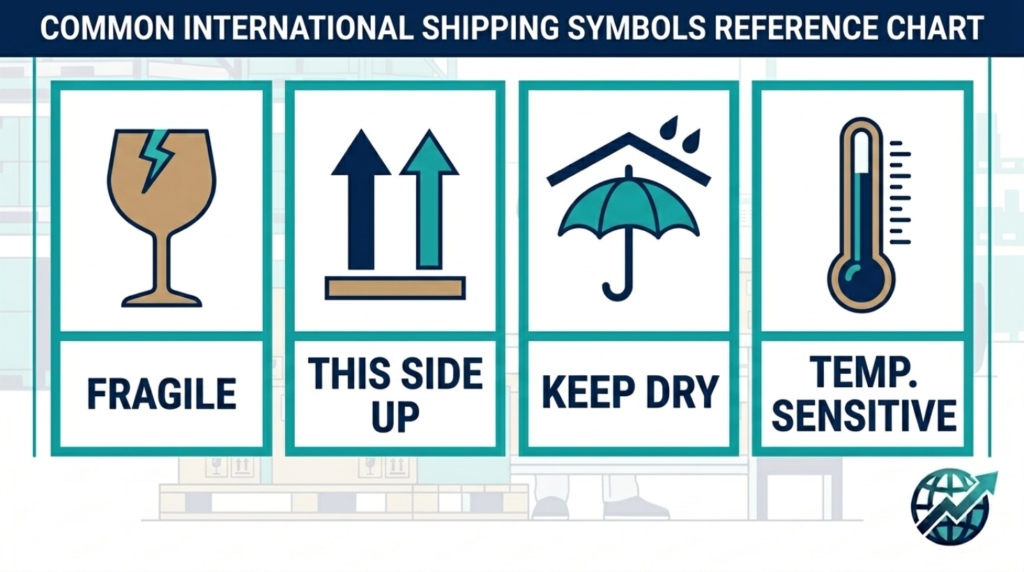
Add internationally recognized handling symbols where relevant: This Side Up, Keep Dry, Fragile, Temperature Sensitive, or Dangerous Goods with the correct UN number and hazard class for regulated materials. These symbols cross language barriers and tell handlers exactly how to treat your package during loading, transit, and unloading.
Labeling Requirements: What Customs and Buyers Expect
Beyond shipping marks, your product labeling needs to satisfy both the destination country’s import rules and general international trade documentation standards. Most export products need some combination of:
- Product name and description
- Country of origin
- Manufacturer or exporter details
- Quantity and net weight
- Manufacture and expiry dates, where applicable (especially for food, cosmetics, and pharmaceuticals)
- Language requirements specific to the destination country — some markets legally require labels in their local language, not just English
For food products specifically, many destination countries require halal certification alongside standard labeling if you’re exporting to markets where this matters, and Pakistan’s own import rules mirror this requirement for incoming food shipments — worth keeping in mind if you’re sourcing packaged food products domestically for re-export.
The Packing List: Your Most Important Shipping Document
Every international shipment needs a packing list that travels with the cargo. This document must include shipper and consignee details, a description and quantity of goods in each package, gross and net weight, dimensions, and marks that match your physical packages exactly.
Your packing list must match your commercial invoice and Bill of Lading precisely. Discrepancies between these three documents are one of the most common causes of customs delays — if your packing list says 10 cartons and your invoice says 12, customs will hold your shipment until you resolve the mismatch.
Common Problems and How to Handle Them
Problem: Your wood packaging gets flagged for missing ISPM 15 certification.
Way out: this is almost always preventable, not fixable after the fact. Source wooden packaging only from ISPM 15-certified suppliers, and inspect the stamp yourself before the shipment leaves your facility.
Problem: Your packaging arrives damaged despite careful preparation.
Way out: invest in pre-shipment inspections, especially for high-value or fragile goods. A packaging vendor experienced in export standards can identify weak points — like inadequate cushioning or a container size mismatch — before you commit to a full shipment run.
Problem: Your labels don’t meet the destination country’s language requirements.
Way out: research the specific destination country’s labeling rules before you print packaging, not after. Requirements vary significantly by country and product type, and a label that’s perfectly fine for one market can get your shipment rejected in another.
Problem: Your packing list doesn’t match your commercial invoice.
Way out: build both documents from the same source data at the same time, rather than creating them separately. This single habit eliminates most mismatch-related delays.
Final Thoughts
Packaging and labeling for export Pakistan shipments isn’t just a formality — it’s a legal and logistical requirement that directly affects whether your goods reach their destination on time and intact. Get your materials, marks, and documentation right before your shipment leaves your facility, and customs clearance becomes routine rather than a source of stress.