
Complete Guide
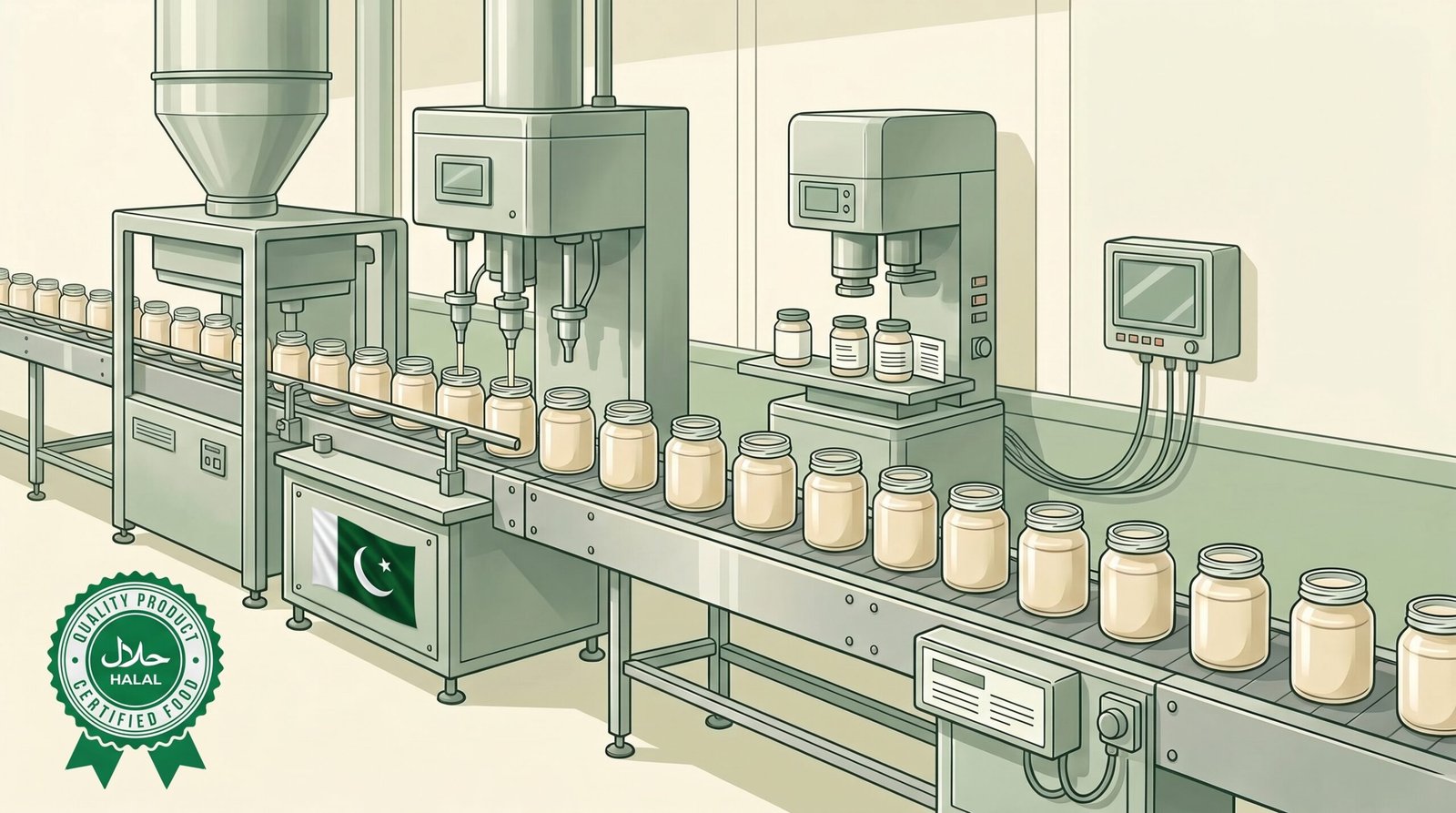
Halal certification Pakistan exporters obtain opens real doors into some of the world’s most valuable food markets. Pakistan already exports halal products worth over $500 million annually, and demand keeps growing across the Middle East, Malaysia, Indonesia, and the EU. This guide covers exactly what certification requires, which bodies oversee it, and how to actually get certified.
What Halal Certification Pakistan Exporters Need Actually Confirms
Halal certification confirms that a food product meets Islamic dietary law requirements. It verifies the product contains no haram ingredients, like pork derivatives or alcohol. It also confirms the product went through production, processing, and packaging under proper Islamic guidelines, alongside standard cleanliness and hygiene requirements.
For meat specifically, certification also confirms the animal was a halal species, slaughtered by a sane adult Muslim, with the invocation of “Bismillah, Allahu Akbar” before each slaughter. Blood must be fully drained from the animal as well.
Who Regulates Halal Certification in Pakistan
Two bodies work together on this. The Pakistan Halal Authority (PHA), operating under the Ministry of Science and Technology, oversees the broader halal ecosystem and promotes halal trade internationally. The Pakistan Standards and Quality Control Authority (PSQCA) develops the actual technical standards, primarily Pakistan Standard PS 3733, which follows OIC/SMIIC international halal guidelines with local adaptations.
Certification bodies themselves must hold accreditation from the Pakistan National Accreditation Council (PNAC) before they can legally issue halal certificates. This accreditation layer exists specifically to keep certification credible for both domestic consumers and international buyers.
Halal Certification Pakistan Exporters Must Follow: Core Requirements
Your entire supply chain needs to stay halal-compliant, not just the final product. This means:
- Using only halal ingredients and processes throughout production
- Preventing any cross-contamination with haram materials during manufacturing
- Keeping raw materials traceable and verified as halal at every stage
- Following good manufacturing and hygienic practices across your facility
- Ensuring equipment stays free from haram contamination entirely
For meat exporters specifically, your slaughterhouse itself needs formal registration for international trade. The Pakistan Halal Authority recently approved a formal registration mechanism for slaughterhouses doing export business, ensuring facilities comply with both Islamic slaughtering practices and hygiene standards throughout the entire chain.
How to Get Certified: Step by Step
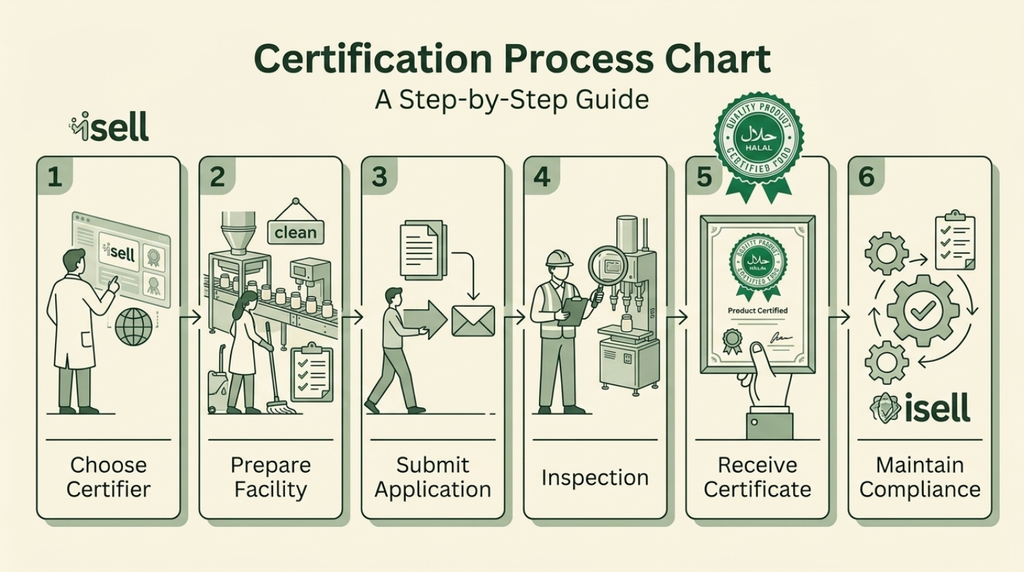
- Identify an accredited certification body. Choose one recognized by PNAC, since certification from a non-accredited body won’t carry weight with international buyers or regulators.
- Prepare your facility and processes. Review your ingredients, suppliers, and production line against PS 3733 requirements before applying, since gaps found during inspection slow down approval.
- Submit your application to your chosen certification body, along with documentation on your ingredients, suppliers, and manufacturing processes.
- Undergo inspection. The certification body will physically inspect your facility to verify compliance with halal requirements firsthand.
- Receive your certificate, typically issued as a yearly certification that renews automatically once you pass annual evaluation and inspection.
- Maintain compliance year-round. Since certification renews based on ongoing evaluation, treat halal compliance as a continuous standard, not a one-time checklist.
Common Problems and How to Handle Them
Problem: You’re not sure if your certification body is properly accredited.
Way out: verify their accreditation directly with PNAC before applying. Certification from an unaccredited body creates real risk, since international markets specifically expect PNAC-recognized certification.
Problem: Your supply chain includes ingredients you can’t fully trace.
Way out: work backward through your supplier list and request halal documentation for every ingredient, particularly additives like gelatin or emulsifiers, which commonly hide non-halal animal sources.
Problem: Your facility fails initial inspection.
Way out: treat this as useful feedback rather than a dead end. Certification bodies typically outline specific gaps, and addressing them before reapplying is far faster than starting the process over with a different provider.
Problem: You’re exporting to a market with stricter requirements than Pakistan’s own standard.
Way out: research your specific destination market’s halal requirements directly, since GCC countries and Malaysia sometimes apply additional documentation or inspection requirements beyond Pakistan’s PS 3733 baseline.
Final Thoughts on Halal Certification for Pakistani Exporters
Halal certification Pakistan exporters pursue genuinely opens access to a fast-growing global market worth trillions of dollars worldwide. Work with a PNAC-accredited certification body, keep your entire supply chain traceable and compliant, and treat certification as an ongoing standard rather than a one-time achievement. Get this right, and your products gain real credibility with both Muslim consumers and international halal-market buyers alike.
Suggested internal links:
- Packaging and Labeling for Export Pakistan
- Customs Clearance at Karachi Port
- Verified Suppliers Pakistan
Suggested external links (authoritative sources):
- Pakistan Standards and Quality Control Authority (PSQCA) official website
- Pakistan Halal Authority official website
- Pakistan National Accreditation Council (PNAC) official website
Tags: halal certification Pakistan exporters, PSQCA halal standard PS 3733, Pakistan Halal Authority, halal certification body accredited, halal meat export Pakistan, PNAC accreditation Pakistan, halal food supply chain, halal export markets GCC, food safety certification Pakistan, halal slaughterhouse registration