


Complete Guide
Chamber of Commerce membership Pakistan is a requirement most growing businesses run into sooner or later. It gives your business official recognition that banks, customs authorities, and international trade partners actually rely on. It’s not just a networking nice-to-have — it’s often a hard requirement for import/export documentation, PSW registration, and trade fair participation.
This guide covers what Chamber of Commerce membership actually means, which membership class fits your business, the exact registration steps, and the problems businesses commonly run into during the process.
What Is a Chamber of Commerce, and Why Does Membership Matter?
A Chamber of Commerce and Industry (CCI) represents the collective interests of the business community in a specific region or industry. Pakistan established these bodies under the Trade Organizations Ordinance 2007, and major cities — Lahore, Karachi, Faisalabad, and Islamabad — each run their own chamber, alongside the Federation of Pakistan Chambers of Commerce and Industry (FPCCI), which acts as the apex body nationally.
Membership isn’t just symbolic. Your Chamber membership certificate verifies your business as a legitimate entity, and banks, PSW (Pakistan Single Window), and customs authorities often require it directly. The Chamber also assists members with export-related documentation, including WeBOC processes, and can issue visa recommendation letters for business delegations traveling abroad.
Membership Classes: Which One Fits Your Business?
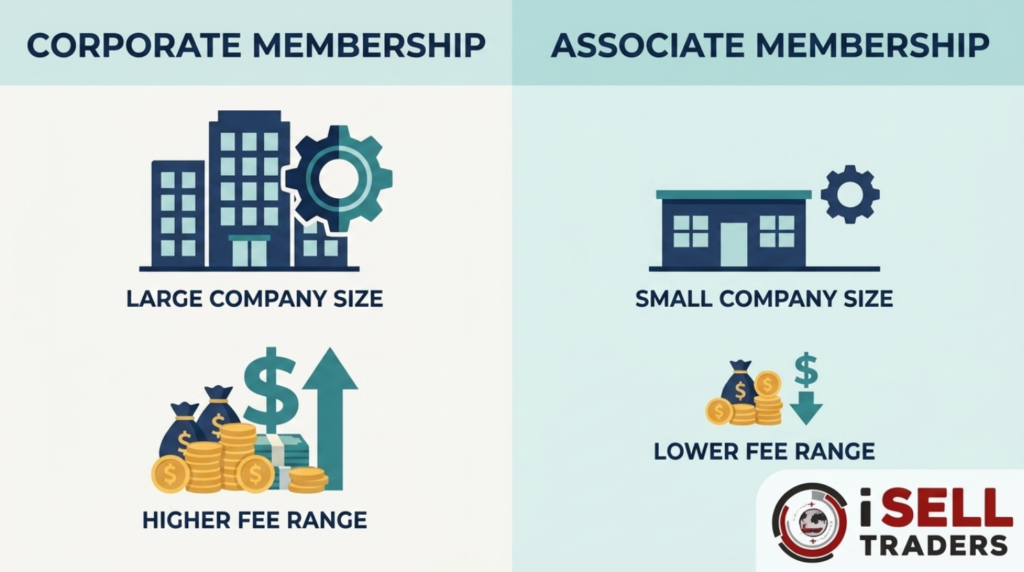
Most chambers offer two main membership classes:
- Corporate Membership — for private limited companies, partnerships, and larger business entities registered with SECP.
- Associate Membership — for sole proprietors and smaller businesses, typically with simpler documentation requirements.
Annual fees vary by chamber and class, generally ranging from PKR 10,000 to PKR 100,000. As a rough example, Islamabad’s Chamber charges around PKR 13,000 annually for Corporate members and roughly PKR 6,850 for Associate members — always confirm exact current fees with your specific local chamber, since rates differ by region and change periodically.
How to Get Chamber of Commerce Membership Pakistan: Step by Step
- Choose the relevant chamber based on your business location or industry — for most businesses, this means your city’s chamber (LCCI for Lahore, KCCI for Karachi, and so on).
- Confirm your eligibility. You need a registered business under SECP or FBR, and you must hold a valid NTN and Sales Tax Registration.
- Download the membership application form from your chosen chamber’s official website.
- Prepare your documents: CNIC, business registration certificate, NTN, bank account statement, and — for many chambers — an application letter on company letterhead, verified by two existing chamber members.
- Submit your application and pay the membership fee.
- Await verification and board approval. Existing members review new applications before approval.
- Collect your Membership Certificate once approved, either yourself or through an authorized representative with a signed authorization letter.
Processing typically takes anywhere from 3 to 40 working days, depending on the chamber and how quickly you submit complete documentation.
Documents You’ll Typically Need
- CNIC (of the proprietor, partner, or director)
- Business registration certificate (SECP incorporation certificate for companies)
- Valid NTN
- Sales Tax Registration, where applicable
- Bank account statement
- Application letter on company letterhead, verified by two existing chamber members (required by several chambers, including LCCI)
Common Problems and How to Handle Them
Problem: You’re not sure which chamber to register with.
Way out: register with the chamber covering your business’s physical location first, since this is usually the standard requirement. If your business operates in a specific industry with a dedicated trade body, you can pursue additional sector-specific memberships later.
Problem: You can’t find two existing members to verify your application.
Way out: many chambers offer guidance or facilitation services for new applicants without existing connections — contact the chamber’s membership office directly rather than assuming this requirement is a dead end.
Problem: Your registration lapses without you noticing.
Way out: chamber registration typically follows an annual cycle, often running April to March. Mark your renewal date as soon as you register, since a lapsed membership can disrupt your ability to process export documentation or PSW-related paperwork at a critical moment.
Problem: You’re a small or home-based business and assume membership doesn’t apply to you.
Way out: even small and home-based businesses need chamber membership if they’re involved in trading, importing, or exporting, or need PSW licensing. Business size doesn’t exempt you from this requirement if your activities require it.
Final Thoughts
Chamber of Commerce membership Pakistan status isn’t just paperwork — it’s a credibility layer that banks, customs, and international partners actively check for. Get your NTN and Sales Tax Registration sorted first, gather your documents, and the chamber registration process itself moves quickly once you know which membership class actually fits your business.
Suggested internal links (add where relevant):
- “NTN and Sales Tax Registration for Import Export Pakistan”
- “PSW/WeBOC Registration” guide
- SECP Startup Registration Guide”
- “How to Start Import Export Business in Pakistan”
Suggested external links (authoritative sources):